A renewal continues a credential under its ordinary cycle. Reinstatement is a state-defined route for restoring a credential after it has lapsed or expired. The terms sound interchangeable in search results, but the application, evidence dates, coursework, fee, and eligibility can change when the status changes.
Do not choose an application because it is labeled “renew” in a portal or because a course provider says its credits “reinstate” licenses. First check the official credential record and the rule for that state, credential type, and lapse period.
Renewal, late renewal, reactivation, and reinstatement
Renewal usually means meeting the ordinary requirements while the credential is active or during the permitted renewal window. Late renewal may allow a short grace period after expiration, often only if the required learning was completed on time. Reinstatement generally means restoring a lapsed or expired credential under a separate route. Reactivation and reissue have meanings set by each agency and may apply to statuses other than ordinary expiration.
A license can also expire because a registration was not paid, even when learning requirements were met; a lapsed status can instead reflect missing professional development. Some states use “expired” as a portal status without calling the remedy reinstatement. The legal status and application route matter more than the word on a commercial checklist.
| Check with the issuing agency | Renewal / late renewal | Reinstatement |
|---|---|---|
| Typical status | Active or within a defined late-filing window | Lapsed or expired under that state's rules |
| Learning dates | Often tied to the ordinary cycle | May require recent credit after expiration |
| Common extra checks | On-time credit, application, fee | Deficiency clearance, tests/fingerprints, fee or coursework |
| Work eligibility | Verify the renewed credential remains valid | Pending application does not automatically restore authority |
| Final proof | Portal shows renewed active credential | Portal shows reinstated/active credential and endorsements |
Compare the facts before selecting a route
Write down the expiration date, present portal status, last date of employment if relevant, and dates of all completed renewal activities. Then compare the routes on these points:
- whether the credential is renewable or was a temporary/provisional document with a different progression path;
- whether all learning was completed before expiration or some is still missing;
- how recent any credit or training must be;
- whether a test, fingerprinting, background check, or employer form is required;
- application deadline, fee, and what status is allowed while the file is pending; and
- whether the state requires payment of past registration fees or a new credential application.
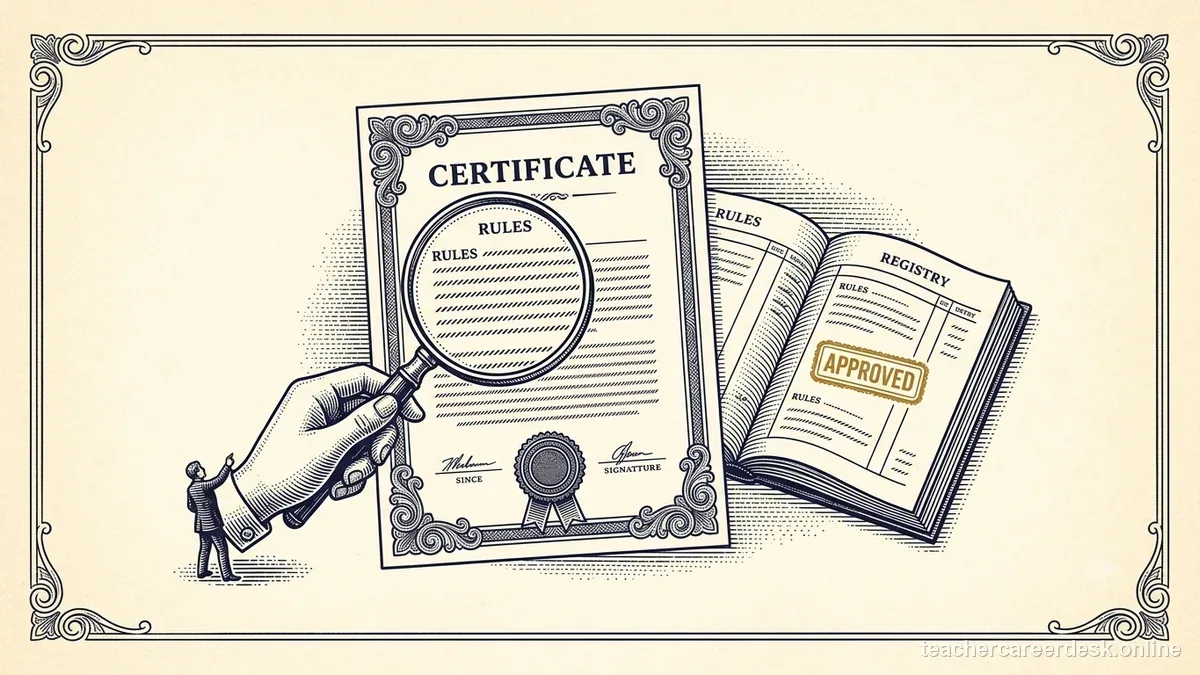
The comparison figure maps the two routes. If any requirement is unclear, leave the item unconfirmed and ask the licensing agency before submitting an attestation or paying for a course.
Florida shows why the effective date matters
Florida law provides a concrete distinction. Under 2026 Florida Statutes §1012.585, a late renewal application with its fee must be submitted before July 1 of the year following expiration to use that late-renewal provision. Reinstatement is a different statutory process: it requires an application, specified certification eligibility requirements, and six college credits during the five years before reinstatement, 120 inservice points, or a combination, including the required special-education component. Learning used to issue the expired certificate cannot be reused for that reinstatement requirement.
There is a timing caveat: Florida’s 2026 law took effect July 1, while FLDOE has published rule development to update Rule 6A-4.0051 and its expired-certificate instructions. The currently posted FLDOE reinstatement page contains older wording and exam information. Do not rely on an old article or that legacy checklist as a complete description of the new rule. Check the current statute, FLDOE’s live rulemaking, and the Bureau of Educator Certification’s written requirement letter for your file. If you need to work while completing reinstatement, Florida says a separate Temporary Certificate application may be needed.
This is why a rule’s effective date and the agency’s implementation guidance belong in the same checklist. A secondary page updated after a statute can still repeat the previous process.
Illinois separates a lapsed license from ordinary renewal
Illinois provides another useful example. Under the Illinois School Code, a lapsed Professional Educator License can be reinstated after outstanding professional-development requirements are completed and entered, with a choice between a $50 penalty or nine semester hours of qualifying coursework; back registration fees also have to be addressed. The coursework option has a state-defined recency window, and the exact dates should be checked in the current ISBE renewal materials.
The important distinction is procedural: first satisfy the missing PD and submit it in ELIS, then apply through the reinstatement option. Paying a penalty by itself does not erase deficient PD. ISBE’s archived reinstatement page may still appear in search results, so use the current code and Renewal page to confirm the live process.
A practical route-selection sequence
- Check the licensing portal. Save the exact credential name, status, expiration date, and deficiency messages.
- Classify what happened. Were renewal conditions complete but the filing late? Is PD missing? Was a registration fee missed? Is the document nonrenewable?
- Open the agency’s route-specific instructions. Find the current renewal, late-renewal, reinstatement, or reactivation rule, including any effective-date notice.
- Match evidence to the route. Separate training completed during the original cycle from activity completed after expiration. Verify provider, subject, time window, tests, and fingerprint rules.
- Check employment separately. Ask district HR whether the current status allows your assignment while the state application is pending. Do not assume that local approval restores a state credential.
- Apply and verify the result. Save the submitted form and payment confirmation, then return to the portal to confirm the credential is active and the correct endorsements remain.
Do not confuse reinstatement with a brand-new license
Some credential types cannot be renewed or reinstated because they were temporary, provisional, or tied to a specific employer or progression step. In that case, the route may be to clear requirements, advance, or apply for a new credential. Likewise, if you moved states, the new state may evaluate your education and experience directly; it may not require restoration of the old credential. Confirm both agencies’ rules before paying for an unnecessary reinstatement.
Keep a record that explains the result
Retain the agency rule or written response, application type, evidence accepted, fee receipt, and the new license record. Record which learning counted and the cycle or status it applied to. When a future renewal asks whether requirements were completed, this trail helps distinguish an on-time renewal from a later reinstatement.
Competitor pages can help explain the vocabulary, but they are not equally current or authoritative. Teacher Renewal Desk offers a useful status-and-timing framework; Teaching-Certification.com gives a Florida state guide but its July 2026 reinstatement summary relies on older exam language; LegalClarity explains general lapse risks but makes broad claims that do not fit every state. The official statute and current agency instructions control your case.
The practical rule is simple: renewal meets the normal cycle; reinstatement follows the lapsed-status procedure. Use the term your state uses, apply the current rule, and confirm the final active status before treating the problem as solved.