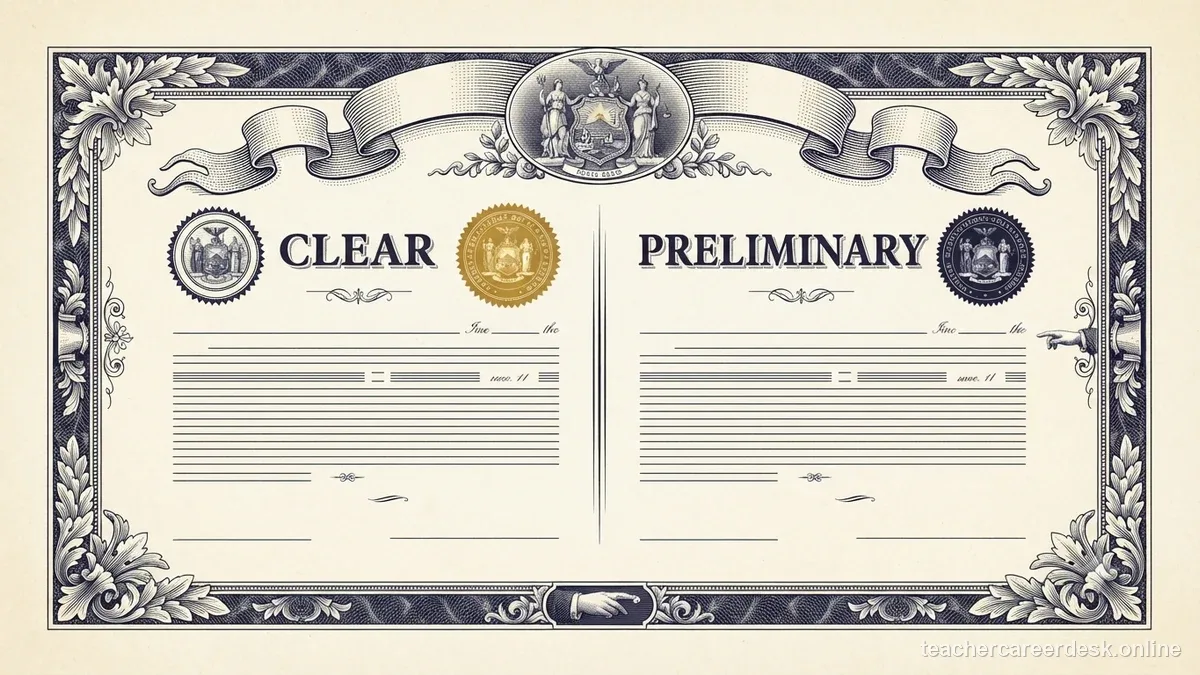
A California teacher does not have one universal “renewal requirement.” The first question is what document you actually hold. The California Commission on Teacher Credentialing (CTC) treats a five-year Clear credential very differently from a five-year Preliminary credential. That distinction matters more than any generic continuing-education checklist.
Clear credential or Preliminary credential?
A Clear or Level II credential means the preparation and program requirements for that credential have been completed. CTC says Clear teaching and services credentials are renewed online, generally without additional coursework or service requirements. Clear credentials normally carry a five-year term, and the holder renews the document so it remains valid for employment.
A Preliminary or Level I credential is different. It is also commonly issued for five years, but it is not renewable. The holder is expected to complete the requirements needed to move to a Clear credential before the Preliminary document expires. For many California-prepared Multiple Subject and Single Subject teachers, that means completing a Commission-approved induction program and being recommended for the Clear credential.
This is why a teacher who searches for “California renewal hours” can easily end up on the wrong path. Some older or specialized credential codes still carry professional-growth requirements, including 150-clock-hour language, but that is not the general rule for today’s standard Clear teaching credential.
| Credential on record | Clear / Level II | Preliminary / Level I | Dependent / special code |
|---|---|---|---|
| Default action | Renew eligible document online | Complete listed requirements to clear | Read full code and base-credential link |
| PD hours | No blanket PD total | Follow document-specific conditions | Some codes retain growth/service rules |
| Verify after filing | New expiration date | Clear credential issued | Base and dependent dates |
Check the renewal code on your own document
Open your educator record and read the credential detail, including the renewal code if one is shown. CTC publishes a renewal-code table because different historical credential types can carry different conditions. Some codes specify professional growth or service requirements, while others identify an extension, induction, or another special condition. Match the full code and credential title; do not rely on a partial code or a general “150 hours” search result.
Do not infer your requirement from a coworker’s credential. Two teachers in the same school can hold documents issued under different preparation pathways.
If you hold a Clear credential
CTC requires Clear teaching and services credentials to be renewed online. Eligible documents may generally be renewed up to one year before expiration. When filed in that window, a Clear renewal takes effect on the current credential’s expiration date, preserving its five-year cycle. A practical renewal sequence is:
- Sign in to the CTC educator account and verify the document that is approaching expiration.
- Confirm that the credential is eligible for online renewal and check any prerequisite credential it depends on.
- Review the application information and professional-fitness questions carefully.
- Submit the renewal and pay the current fee.
- Save the payment receipt and application confirmation.
- Return to the public credential record after processing and verify the new validity period and dependent-document dates.
As of July 1, 2026, the CTC processing fee for a Clear Credential renewal/reissuance is $125, plus the $2.65 online service fee. CTC says fees are earned when received and are not refunded, so confirm the fee and selected document before submitting.
If you hold a Preliminary credential
Treat the expiration date as a clearance deadline, not a routine renewal date. Review the “renewal requirements” or credential-detail language attached to the Preliminary document and identify what is still outstanding.
For many California-prepared Multiple Subject and Single Subject teachers, induction is the central step. California describes teacher induction as a two-year, job-embedded program for new teachers. After successful completion, the program sponsor recommends the teacher for a Clear credential. Other pathways can have different conditions, so use the requirements attached to your own credential rather than assuming induction is the only possible route.
Some Preliminary documents issued during pandemic-era flexibilities include a TPA renewal code. CTC’s current guidance says eligible holders no longer need to pass the TPA to clear, but they must still meet the other applicable requirements. Check the document-specific guidance if a TPA or RICA code appears; do not assume every assessment code was removed.
If your Preliminary credential is close to expiration and you have not completed the required path, contact the program sponsor and CTC early. Extensions by appeal exist for specified circumstances, but are not automatic and do not replace the clearance requirements. Ask the employer about authorization to serve while an appeal is pending.
Dependent credentials and other document types
A Clear credential may be the prerequisite for another credential or authorization. A dependent document normally cannot extend beyond the prerequisite’s expiration date, so renewing the base credential first can affect the new dates on related documents. In the CTC account, check each credential separately and confirm that the final record shows the expected expiration date for both the base and dependent document. Emergency permits, child-development permits, and life credentials also follow different rules; use their own CTC category instead of the standard teaching-credential steps here.
What happens if a Clear credential lapses?
CTC explains that no California public-school service is authorized between the expiration of a lapsed Clear credential and the effective date of a reissued credential unless the employer files a separate validation-of-service request. A late reissuance can therefore create an employment issue, not merely an administrative inconvenience. Preliminary credentials are a different case: they cannot simply be renewed, and a holder who is still teaching should contact the employer about an appeal extension before the document expires.
If you discover an expired document, tell the district credential analyst or HR office immediately and verify the state path before continuing to work in an assignment that requires that credential.
- Read exact document title, credential type, validity dates, renewal code, and listed conditions
- Confirm whether the correct action is renew, clear/upgrade, or a code-specific transaction
- Check the base credential before renewing a dependent document
- Confirm current CTC fee and online service fee before payment
- Save receipt; verify the resulting credential and all expiration dates after processing
Records worth keeping
For a normal Clear renewal, keep the application confirmation, payment receipt, and updated CTC credential record. For a Preliminary-to-Clear transition, also keep induction completion evidence, program recommendation, and proof of any code-specific requirement. If a dependent credential is involved, save the updated record for both documents.
A clean file should answer three questions without relying on memory: what credential did you hold, what rule applied to that document, and what did CTC ultimately issue?