If you discover that your teaching license has expired, begin with the state record—not a course catalog or generic reinstatement checklist. “Expired,” “inactive,” “lapsed,” and “deficient” can lead to different applications, evidence windows, and employment consequences. Your first job is to identify the exact credential status and prevent a paperwork mistake from becoming a second problem.
1. Capture the official record
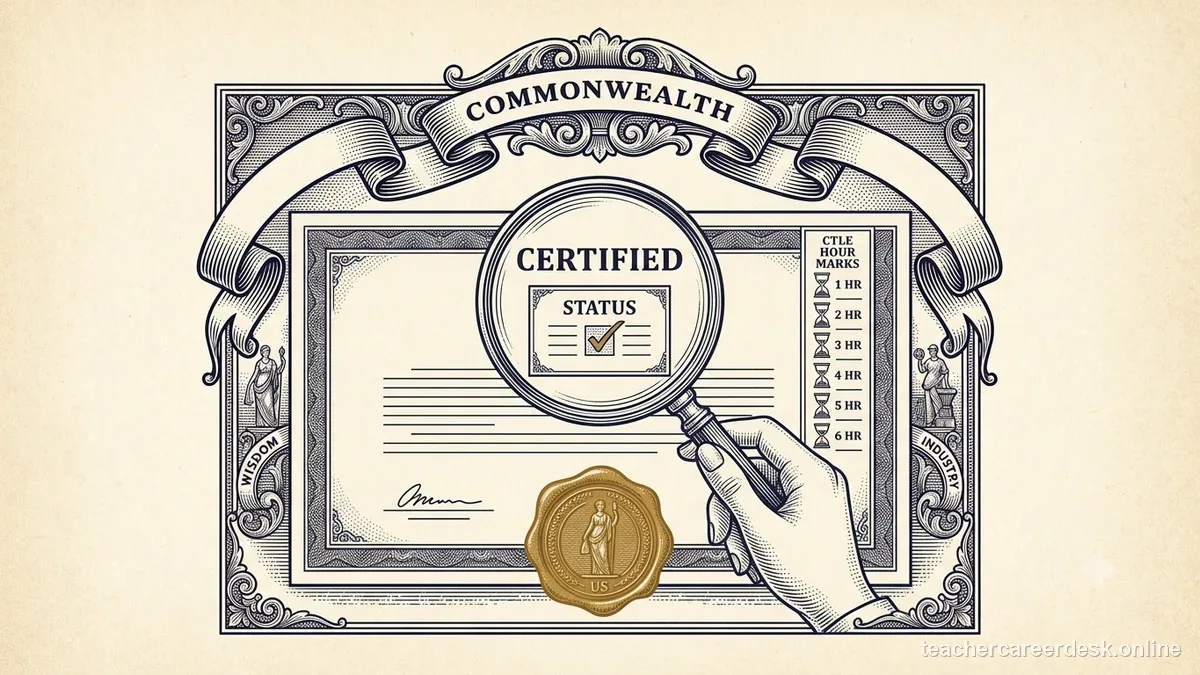
Sign in to the state educator portal or use its public credential lookup. Save a dated copy or screenshot and write down:
- the issuing state and exact credential name, level, and subject endorsements;
- the printed expiration date and portal status;
- any deficiency, restriction, or pending application;
- when each renewal activity was completed; and
- whether another state currently holds an active credential for you.
Use the credential number when contacting the licensing agency. A district spreadsheet, old certificate PDF, or “application received” email may not show the current state status. If the portal contradicts your document, ask the agency to reconcile the record before choosing an application.
2. Tell the employer if the credential is required for your job
Contact the district certification office or human resources promptly if you are employed, about to start work, or have an assignment that depends on the credential. Ask which state status is required for your role, whether you may continue or begin work while a correction is pending, and what documentation the district needs. An employer’s willingness to wait does not itself reactivate a license.
California’s Commission on Teacher Credentialing says public-school service is not authorized between expiration and reissuance in specified credential situations unless the employer files an applicable validation request. Other states and document types have different rules. Do not assume you can teach because you have paid a fee or started an online application.
3. Find the route for that exact credential
Open the state agency page specifically for the expired status and credential type. Look for whether the document was renewable, how long it has been expired, whether its renewal conditions were met before expiration, and what date window applies to professional learning. The route might be a late renewal, reinstatement, reactivation, reissue, or a new application. Those terms are not interchangeable, and the next article in this guide compares renewal with reinstatement in more detail.
A few official examples show why the exact route matters:
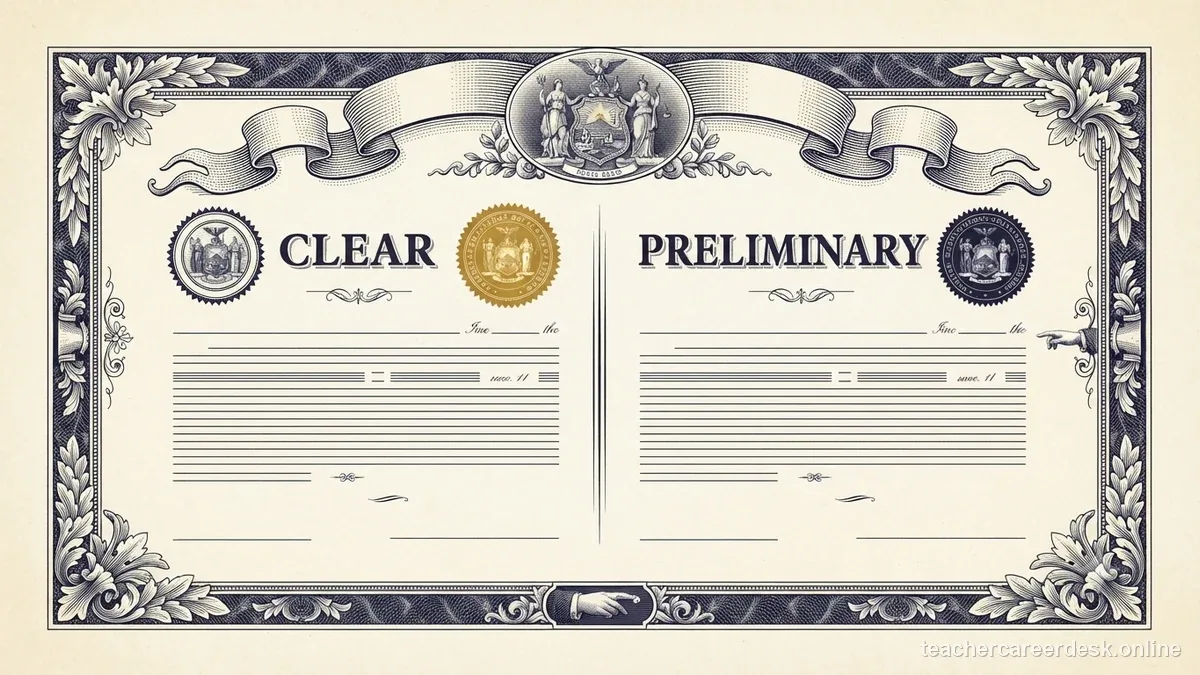
- California: Eligible expired documents may be renewed at any time if requirements are met; the Commission says a lapse longer than 18 months may require new fingerprint information. Preliminary/Level I credentials are not renewable online and must be cleared for reissuance.
- Arizona: A renewable standard certificate with no deficiency can follow the returning-educator path when expired at least two but less than ten years. More than ten years generally means applying under current certification requirements; other certificate types have separate rules.
- Washington: Rule WAC 181-79A-240 requires qualifying applicants renewing an expired certificate to document 100 continuing-education credit hours completed within the five years before the application, plus fingerprint, character-and-fitness, and other certificate-specific requirements.
- Texas: TEA permits renewal of an inactive standard certificate after the educator completes the applicable CPE, applies, and pays the required fees. Expiration alone does not require retaking certification exams. This rule is specific to Texas standard certificates.
These examples are not substitute pathways for another state. A state may also change its rules by credential tier or lapse length, so confirm the agency’s current page before you spend money.
4. Separate missing credit from a late application
Make a two-column timeline: credit completed before expiration and credit completed after expiration. Add the activity date, original unit, provider, and evidence for each entry. Then check which dates the expired-license route accepts. Some agencies allow late filing when the renewal work was already done on time; other routes permit a recent lookback period. Do not combine the two sets of hours or attest that a requirement was met until you know which application applies.
If the state requires missing courses, exams, fingerprints, or employer sponsorship, note the exact item and official instructions. Ask the agency in writing when the portal labels are unclear. Retain the response with your record.
5. Hold off on buying a recovery course
A course that counted during the original renewal cycle may not count for a reinstatement or reissue. Before paying, verify the provider’s status, topic, completion window, required documentation, and whether the state accepts the course for your exact credential. Also check for current exams or background checks; a purchase receipt is not proof of eligible credit.
For example, Arizona’s returning-educator rule for a specified group of renewable credentials differs from Washington’s expired-certificate route. A provider that advertises “accepted nationwide” cannot determine the rule for your license. If an approved option is not clear, ask the licensing agency for written confirmation first.
6. Build a short recovery checklist
Once the route is confirmed, track only the requirements the agency lists:
- official credential status and expiration date;
- correct application type and submission portal;
- accepted learning, exams, or deficiency items;
- fingerprints or background-check steps, if required;
- employer form or sponsor request, if required;
- fee and processing confirmation; and
- updated state record showing the new active status.
Keep copies of the submitted application, payment receipt, confirmation number, and supporting documents. Check the portal after processing. A receipt proves a transaction occurred; it does not prove the credential is active.
- Save the official credential record and status
- Notify the employer when the assignment depends on the license
- Identify the route for this credential and lapse length
- Separate pre-expiration and post-expiration learning
- Verify courses, exams, fingerprints, and forms before paying
- Check the portal again for active status after processing
If you left teaching for several years
Treat a long break as a records-and-status question, not as proof that you must start over. An agency may accept an old credential through a route with current conditions, or may require a fresh application after a time limit. The exact answer depends on credential type and lapse length. First check the state record, then ask which requirements apply to the credential number you held. If your goal is to teach in a different state, ask that receiving state whether it needs the old credential restored or can evaluate your preparation directly.
The safe first move is consistent even though the rules are not: confirm the issuing agency’s record, protect your employment status, identify the pathway, then do only the work that pathway accepts.